Photography means drawing with light. It was first discovered in between the 1830's- 1840's although many people knew about photography they didn't know how to keep the image as a photograph. The first camera made was a camera obscura, it's made by completely blacking out a room or a box but leaving a little hole uncovered so that the light is able to travel through and projecting the outside image either onto the wall or onto the other side of the box. The outside image is projected upside down because due to the laws of physics being that light travels in straight lines.
In 1826 Niepce created a permanent image as did Henry Fox Talbot in 1834.
In 1837 Louis-Jacques-Mandé Daguerre created a process in which the image was able to be permanently fixed. Niépce and Daguerre worked on many formulas to try find the right solution to reverse the image upright.
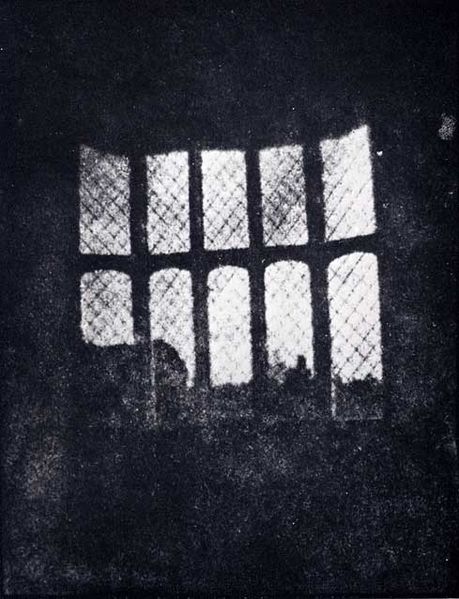
The first image ever taken was by Henry Fox Talbot:
This was the first ever picture photographing people by Louis Daguerre.
The invention of photograph impact art and artists livelihoods because they would be documenting historical events, painting famous buildings and being paid mostly for portraiture paintings. Although photography didn't completely threaten arts existence it merely cut down on the amount of work an artist could do. It also allowed experimentation for artists to try different techniques so they could support themselves. The invention of photography also gave freedom to the artists who felt compressed and bored within their work so they could explore different passions or mix photography and art together.
The "Hockney-Falco Thesis" proves that photography has had an impact on art because David Hockney had a wall of paintings in chronological order starting from the 1300's. After the 1400's more portrait paintings became realistic in facial expression, patterned clothing and armour. Reasons for this is that artists used the camera Lucida to reflect their image so they could draw or paint it.

In the early days of photography photographers imitated artists paintings for example they photographing landscapes, portraits and architecture to claim the artistic status. 19th century artists criticized photographers and disliked them at first some painters developed photographic techniques for their work. As photography is all about lighting painters tried to capture the effect of light and the changes of light for example sunrise to sunset. Around the 1870's when the unexpected change in art happened. The artists would paint what they saw in front of them exactly as it was and also how it would look through peoples eyes.
Some of the most famous artists from the impressionism era include:
Eduoard Manet: He started off the impressionism paintings, he painted everyday objects.
He took his influences from Frans Hals, Spanish painter Diego Velázquez and Francisco José de Goya. Manet's work techniques involve loose brush strokes and simplified detail. But because they are simplified details for example the painting of the dog his brushwork is quite loose that the fur seems realistic. I think photography effected Manet because he painted everyday objects as most artists painted portraits so they could support themselves therefore painting everyday objects was a new fascinating thing that artists wanted to document and with photography developing you could photograph anything not just stick in the boundaries of portraits, landscapes and architecture.
Another artist is Edgar Degas. He is most famous for painting ballerinas and race horses.
Degas did a whole section on horses because trying to get a photograph in an action shot or freezing a moment in time was a extraordinary finding which many tried to capture. Degas studied a horses movement trying to capture the pulling back on the reins from the rider but also to capture the horses legs as they stretch out in strides. I think photography effected Degas because he wanted to capture the movement of horses and ballerinas as movement is a fascinating thing that happens everywhere and to be able to freeze that moment is spectacular which he tried to convey in his paintings.
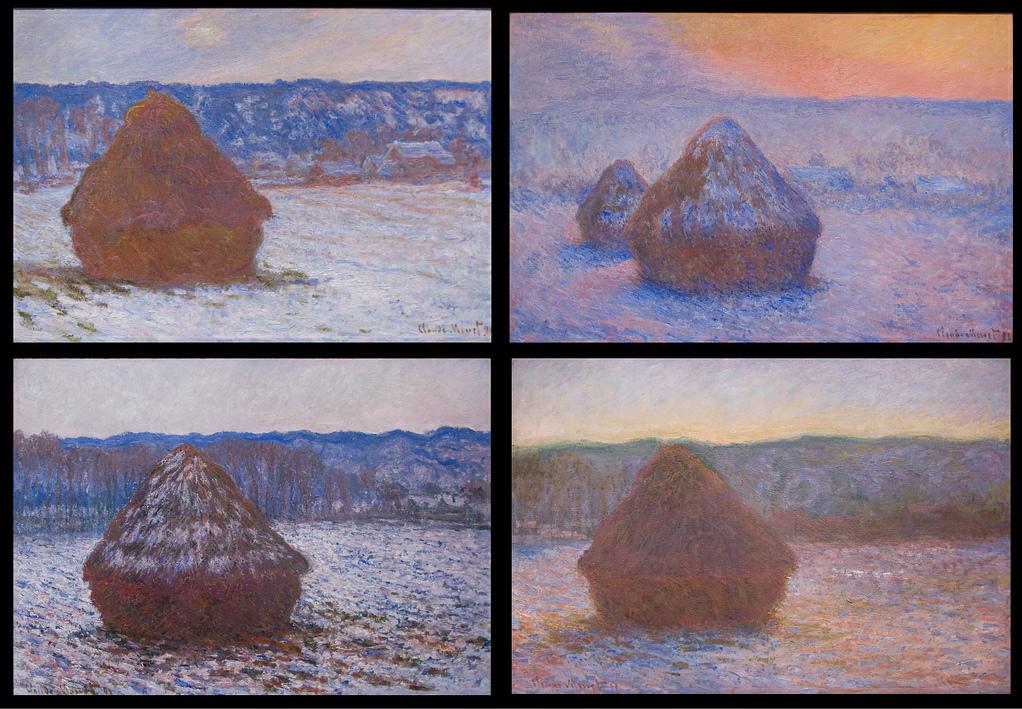
Another famous painter of the impressionism era was Claude Monet. Claude Monet was most famous for his time series painting.
Claude Monet's 'Haystacks' paintings were some of his most famous paintings because of the time he had spent painting them. Monet's inspiration for his haystacks paintings came from Katsushika Hokusai. Monet painted these to show the different observations in light, weather(seasons) and times of the day. As well as going back to the same place to paint the haystacks Monet also did the same for water lilies and the cathedral at rouen. I think photography effected Claude Monet because lighting is essential in photographs and Monet realised this and wanted documented it in his paintings.
As photography was invented it created new art movements and went on to influence modern day art work as both techniques could be combined together to create new work. In the modern day photography has become more and more advanced with thousands of cameras being produced so anyone can buy a camera and take photographs whereas when photography was first discovered only rich people could afford to buy the cameras and the equipment to develop their photographs. Photography and technology has impacted the whole world because as soon as you take a picture it can uploaded to the internet for everyone to see or print the image out for a book. Painters couldn't advertise their paintings on the internet but now they can, therefore developing more business and publicity. As the camera documents what it see's that can now be changed by photograph editing software meaning that parts of the photograph can be erased or changed.